On a recent episode of his excellent Electronically Yours podcast, Heaven 17’s Martyn Ware singled out Let Me Go as the best Heaven 17 track, and after revisiting it based on that proposition, I wholeheartedly agree.
The lead single from Heaven 17’s second album The Luxury Gap, Let Me Go stalled at #41 and was eclipsed by the massive success of follow-up Temptation. There’s no question that Temptation is a 24-carat solid gold pop classic, but it is Let Me Go which best encapsulates what Heaven 17 are all about.
It effortlessly walks the tightrope between the band’s left-field influences (Kraftwerk, Roxy Music and even Ware & Ian Craig Marsh’s own Mk1 Human League) and their more mainstream pop aspirations.
The first half of the song is Heaven 17 for the purist; the early verses are sparse, almost desolate; Glenn Gregory’s commanding vocals dominate a backing comprising of a robotic frog bassline and a synth motif which sounds like a police siren being fired out of a cannon. The real passion kicks in with the chorus, with Gregory’s almost desperate “And YET!” line boiling the song’s “enough is enough” theme into two words.
The second half of the song takes us into pop territory with a lovely bit of Chic-like guitar, leading into the “bap-a-do-bap” refrain which is simply a work of genius - and all the better for being held back for delayed gratification. Many other acts - probably including Mk 2 Human League - would have used this refrain throughout the track, even opened with it, and one wonders if Let Me Go would have been a bigger hit had Ware, Gregory and Ian Craig Marsh taken that route. But perhaps that’s not a very Heaven 17 thing to do.
Lyrically, the song moves from wistful memories of a love which has fallen away, through to anger then exploration about its loss, and ending with reluctant acceptance, culminating in the heartbreaking “Found guilty of no crime / They were the best years of our lives” couplet. The Kubler-Ross Change Curve in 4 and a half minutes, basically.
In the aforementioned podcast, Ware explained how the band desperately tried to persuade Virgin Records to go with Temptation as the lead single from The Luxury Gap but they were overruled. There is no doubt in mind Temptation would have been a hit whether it went first or second but part of me regrets that, by being first out of the traps, Let Me Go was not given its true moment in the sun.
It is the end of September 2018 as I write this, and I am here to tell you about the album of the year.
Still Life is the debut album from Swedish songwriter and producer Peter Kvint. Kvint has had a long career behind the scenes, working with acts like Andreas Johnson, Britney Spears and Morten Harket. Having enjoyed Kvint's work on Harket's contributions to a-ha's last studio album Cast In Steel, I was moved to check out his solo material. And I'm so glad I did.
Still Life, for me at least, is the album of the year. And yes, I know there are still a few months left of 2018, but this album has impacted me so much that I'm sure if anything will top it.
The album has had a long gestation period; Kvint himself suggests he had no real intention to become a performer, but he found himself with a number of songs he'd written and performed for special occasions - songs so personal to him that he couldn't see anyone else but him fronting them.
Still Life is well named, with its title having a double meaning; still life in that it is a snapshot in time, a portrait of the life of a man reaching middle age, but also still life in the sense that we're still here and we still have to live, whether life is good or bad, or a combination of both.
Opening track (and lead single) Seasons In You is a gorgeous, melodic tribute to Kvint's wife (he wrote and performed it for her 50th birthday), where Kvint tracks their relationship and his feelings for his wife against the four seasons. It also sets the sonic template for the album; largely driven by acoustic guitar but peppered with electric guitar and electronics, the sound of the album is reflective and organic.
Sea of Heart is possibly the key departure from this sound; it's almost like a-ha doing Bobby Darin, but its dreamy texture and wall of 1950s Americana backing vocals impresses.
Perspective is a punchy journey into Kvint trying to understand the man he is now at this stage of life, as compared to the person he always assumed he was, with these thoughts culminating in an impressive instrumental break.
The next two tracks are possibly the album's highpoints. Willow Tree is a superb ballad, with a melody that is worthy of Lennon & McCartney; Kvint contemplates his marriage in which he and his wife have, like the tree in the title, bent to life's demands, but have not been broken by it. The lines of the chorus - "I'm picking up the pieces of you / You're picking up the pieces of me" - are moving, especially with Kvint's delivery, and the extended choral coda which brings the song to its conclusion is beautiful.
Opening with some noodling synths, The Chaos Theory has a melancholic melody which gets you right in the heart; I can't listen to this track without getting a tear in my eye and a lump in my throat. Kvint expresses the view that modern life is hard, but we need to stay strong and keep the big picture in mind. The emotion of the chorus - "Butterflies will flap their wings again / Hurricanes will rock your world, my friend / Count your love and multiply" - makes this song an instant classic.
Sculpture discusses how we are shaped by life and the people around us, and how that shaping never ends, with Kvint again taking stock of his life. Kvint adds some lovely brass/woodwind to this track, which gives it a real jazzy feel.
Turn My World Around Again is a restrained yet emotional paean to a close friend of Kvint's who sadly passed away; it was this track, which Kvint performed at the funeral, which instigated the whole album. This plaintive piece expresses the pain of losing a loved one, with Kvint's lyrics - "Shine a light on my friend / Lead his way until the end / Bring him home / Turn my world around again" - bringing tears to my eyes when I think of those who have passed on.
Battleships is a further departure, with its beefier production moving away from the intimacy that permeates most of the album and towards a radio hit. It is possibly one of the most immediate tracks on the album, with its lyrics seeing Kvint in fighting mode; the more contemplative Kvint gives way to a man determined to stand his ground instead of retreating.
Life Is Complicated brings Kvint back to the album's recurring theme, about how life can be a struggle at times but that doen't mean that one should avoid living it to the full -- a message reinforced by the track's laidback guitars and percussion. Some lovely backing vocals and a winning chorus make this track the dark horse of the album.
The Puzzle opens with an amazing extended instrumental intro, a lovely mix of woodwind, strings and guitars, before we get to the brilliant opening lyric - "There's a hole right inside of you / Where the people see right through you". This epic piece - all 7 minutes and 31 seconds of it - has Kvint address the listener directly; we're all incomplete in some way, there's something about us all which isn't quite right, and we spend much of our life trying to understand it.
Many artists probably would have ended the album on the anthemic The Puzzle, but Kvint ends -- as he began -- with a low-key tribute to his family, this time to his children, on Singing Every Song For You. Kvint talks about his children starting to making their own way in life but reminds them that everything he does is for them and that he's always there for them, even when he's not at the their side. It's a gorgeous track, and is absolutely the right way to close such a personal album as this.
This album has really stuck with me; the lyrics have made me think, and the melodies have made me feel. I'm a few years younger than Kvint, but I can really relate to the themes he has tackled on this brilliant album.
After a few days of listening to the album on Spotify, I knew I had to actually own the album (and support Kvint more directly) so I stumped up to get the CD shipped from Sweden. But if you don't want to do that, then it is available on Spotify and also available from the usual downloads sites such as iTunes. I'd urge you to give it a try; it might not be to everyone's taste, but this album is such a heartfelt and poignant piece of work that it deserves to be better known.
Kvint himself has been so inspired by the process that he has started work on a follow up, and I am really looking forward to hear what he comes up with. Until then, I will continue to spend some more time with Still Life. Which, may I remind you, is the album of the year.
There are many contenders for The Best Kim Wilde Tracks You've Never Heard - and I'm going to cover a number of them in a new series of blogs - but I'm going to start with my favourite.
Kim Wilde had enjoyed a successful 1980s, starting out with catchy and lyrically intriguing hits crafted by her father, the famous rock and roll singer and songwriter Marty Wilde, and her brother, talented songwriter and producer Ricky Wilde. Her debut Kids In America is perhaps her defining hit, but tracks such as the haunting Cambodia, the eerie View From A Bridge and the risque The Second Time showed there was real depth behind the blonde beauty with the unmistakable voice. The second half of the decade saw Kim score a massive hit with a contemporary take on The Supremes' You Keep Me Hangin' On, followed by a real smash hit with the legendary You Came and its parent album, 1988's Close - both of which saw Kim make a bigger contribution to the songwriting, alongside Ricky.
With Kim ending the 1980s on a high, it is fair to say that there were high hopes for the 1990 album Love Moves. Unfortunately for Kim, the music scene had changed quite dramatically in the two years which had elapsed between 1988's Close and 1990's Love Moves. The pure pop which had dominated in the late 1980s had given way to an emerging dance and indie scene, and those with a populist approach struggled to adapt. New acts like Yell! and Halo James would have been certain to succeed a year or two previously, but their success was limited and short-lived. Even Stock Aitken Waterman saw their success start to waver in 1990, although they enjoyed a successful year by anyone else's standards.
And Kim also suffered from this change in the marketplace. Perhaps this was down to the record-buying public moving on, or even due to decisions made by Kim's record company MCA, but it should also be noted that Love Moves gave us a different sounding Kim. Where Kim had previously enjoyed a harder edge to her sound - even on the poppy Close - the overriding sound of Love Moves was smoother, more polished. It sounds like Kim and Ricky Wilde may have taken some inspiration from the polished soul/pop which was prevalent in 1989, from artists such as Karyn White and Lisa Stansfield and if so, one can see the sensibility in that decision. After all, few saw the explosion of the dance and indie sound coming so quickly into 1990. But, at the time of its release, Love Moves sounded like a record released a year too late.
What probably didn't help was the choice of singles. Whilst Love Moves has a mixed reputation amongst Kim Wilde fans, it is actually a strong, coherent album, with a number of strong tracks - and I would argue there were better candidates for UK singles than the tracks selected. Lead single It's Here has a lovely Kirsty MacColl-esque melody, but it lacked the immediacy required to relaunch Kim - it just missed the top 40, peaking at #42. Second single Time was stronger, with a more punchy sound, but this fared worse with a peak of #71 in the UK chart. A further UK single followed - strong ballad I Can't Say Goodbye -- but again, failed to resonate with the record buying public, with a peak of #51.
But what is frustrating is that, tucked away in the tracklisting. there was a surefire smash hit single on Love Moves; the wonderfully over-the-top rock-pop masterpiece that is Can't Get Enough (Of Your Love).
A Kim & Ricky Wilde composition, Can't Get Enough (Of Your Love) stands apart from the rest of Love Moves; not just thematically - it's an impassioned tale of a lovestruck woman unable to let go of a lover who is clearly bad for her - but also sonically; the smooth soul-pop sound which dominates the album gives way to the classic Kim Wilde rocky-pop of old.
Despite the klaxon-like synth which opens the track, there's a real stadium rock feel to this track. An impressive burst of electric guitar - courtesy of long-time Wilde collaborator Steve Byrd - kicks off proceedings, followed by thumping drums and a whistling synth line.
Lyrically, it's a bit more playful, a bit more melodramatic than many of Kim's tracks. "I'm a prisoner who can never leave / Someone that you use anytime you please" is the opening gambit, followed later by a similarly heated claim in the second verse - "And the fever rages in my soul / Begging you to want me and take control".
Kim is on fine form vocally here, belting the song out for all its worth and really contributing to the raw, energetic feel of the track.
A dramatic bridge - "As I face another lonely night / A different lover will hold you tight / It's not right" -- takes us into the amazingly catchy chorus - "I can't help myself from crying over you / I can't get enough of your love / Yeah I'm dying cos it's true / I can't get enough of your love".
Pleasingly, Byrd's lead guitar carries on throughout the track, giving it a real energy and really selling the typically robust Ricky & Kim melody - taking us through the instrumental break and into a few more iterations of the chorus.
And then it ROCKS OUT. Much of the final minute of the track is taken up with a superb electric guitar solo, with Byrd giving it all he's got. It's seriously impressive stuff, and if it doesn't make you play along on air guitar, then there's no hope for you, quite frankly! Whilst it's a terrific bit of musicianship in its own right, it combines with Ricky's synths and drum programming to create a thrilling coda to the track.
It's such a wickedly intoxicating creation that it cannot fail to inspire joy in the listener; it's a real "prick up your ears" track, and it has a real wallop to it.
To be fair, Ricky Wilde is great at these kind of power pop tracks, but Can't Get Enough (Of Your Love) must be one of his crowning glories. Some commentators have noted that it's cut from the same sonic cloth as 1988's Never Trust A Stranger, another totally amazing Kim Wilde track with perhaps the greatest drum track of any record ever.
Whilst MCA didn't release it as a single in the UK, it did get a single release in Europe, where it reached #21 in France, and #58 in Germany. OK, so maybe not hugely successful chart positions, but I do think that if Can't Get Enough (Of Your Love) had been the lead single in the UK, then it would have done well enough to give the follow-up singles from Love Moves more of a fighting chance.
But that brings me back to my earlier assertion - that, at that point in 1990, the musical style of Love Moves was perhaps out of step with everything else going on at the same time. Hell, many other worthy records by other acts suffered from the same problem. So perhaps my faith in Can't Get Enough (Of Your Love) as a 1990 UK hit is misplaced, and maybe its release as a UK single would not have changed matters much. (Though, happily, Kim bounced back with her next album, 1992's Love Is, a strong collection of tracks which yielded a few UK hits).
Nevertheless, Can't Get Enough (Of Your Love) is a real pop belter; great melody, fun lyrics and terrific production. And it's almost criminal that the track isn't more widely known.
So, give it a play below. You'll thank me, I promise you...
January 2016 has been an unrelentingly sad month, with the loss of many talented, creative people. Lemmy, Alan Rickman, Colin Vearncombe and of course, David Bowie have all passed, leaving a huge legacy. And now today, we have lost Sir Terry Wogan, undoubtedly one of the greatest broadcasters the UK and Ireland has ever seen.
If anything, I feel Sir Terry's loss more keenly than those others mentioned above; not simply because of his effortless talent, but also because his presence in my life was so pervasive. He's always been there, and when you consider that he was a daily presence in many people's lives for so long, it does feel like I have lost a member of the family.
I think my earliest memory -- and one of my overriding memories -- of Sir Terry dates back to 1980 or thereabouts. My dad has long been a fan of Sir Terry, and would always listen to his Radio 2 show (first time around) in the car. On this particular day, he was taking my younger brother Tony and I to school. Sir Terry lined up a track by Alvin Stardust, and introduced him as Alvin Starbar. Now this was the funniest thing ever as far as a 7 year old and 5 year old were concerned, and we were both in fits of laughter for the rest of the journey. In fact, my brother messaged me today referring to this anecdote.
As a fan of Kenny Everett, I'd also appreciate his and Sir Terry's interactions on Kenny's sketch show and on Blankety Blank. As a kid, I remember being open-mouthed when Kenny bent Sir Terry's trademark microphone in two; in fact, watching that clip again on YouTube today demonstrates how ramshackle Blankety Blank looks compared to today's slick quiz shows, but I'll tell you now, it was all the better for it. The camaraderie between Sir Terry and the celebrity guests, and indeed his interactions with the contestants, is just a joy. Sir Terry may be winging it but he knows what he's doing, he's got it all under control. It's just an effortless, charming watch, and it's sad we've lost a lot of that in today's TV.
Sir Terry's charm was also evident in his thrice-weekly chatshow, Wogan. It takes a real professional to be able to host three chat shows a week for 8 years, and if anything, his ability to make it look so easy in some ways undermined the hard work involved. At turns earnest, cheeky and probing, Sir Terry could handle any guest the BBC booking agents threw at him, and was able to win over even the most aloof of contributors. Some say that Sir Terry's geniality slipped when he interviewed David Icke in 1990; the view was that Sir Terry's approach was colder than usual, and that this may have been unfair given the view at the time that Icke may have been going through a personal crisis. Whatever one may think of Icke and his world view, one must remember how unusual the whole affair was and in defence of Sir Terry, I would suggest that this was a difficult interview for anybody to get right. I can't think of any of Sir Terry's contemporaries who could have handled that interview successfully.
His work with Children In Need needs little introduction, and as well as being a figurehead for the cause, his ability to get the tone between frivolity and seriousness just right at the right points on the telethon night itself is much underrated. Likewise, his involvement in Eurovision brought a welcome sense of fun to an event which could be accused of taking itself too seriously at times.
If I think back to what Sir Terry means to me, I think of his second tenure as the Radio 2 breakfast host. I started listening to Radio 2 properly in 1996, when I got my first car (a Peugeot 205!) and that's when I was really drawn into what Sir Terry was really about. Older but not necessarily wiser, I was at an age where I started to get him and his whimsical take on the world. A gentle listen, easing the listener out of the hypnogogic state and into the reality of working life. A bridge between personal time and work time. His way with words impressed, his ability to take a listener's contribution and perform it perfectly impressed, and it was even better when he'd read something out but struggle to keep his laughter in check. Like when he'd crack up reading out the hilarious Janet & John stories; him laughing would have me laughing, have the nation laughing.
In more recent years, I'd still listen to Weekend Wogan on Radio 2 on Sunday's, and an unexpected televisual delight of last year was BBC2's Terry & Mason's Great British Food Trip. A 20-part series which featured Sir Terry and London cabbie Mason McQueen travelling to various British cities to check out the sights and tastes, this was a warm, amusing, entertaining series which showed Sir Terry as a man at the height of his powers. His rapport with Mason was a joy to behold, and it was evident that Sir Terry was having a ball.
But you know, that's the great man down to a tee. He spent 50 years having a ball, whether on radio, TV or carrying out charitable work. And we had a ball watching him do it.
A great broadcaster who will be greatly missed. Rest in peace, Sir Terry.
Before Christmas, I'd been listening a lot to Black's 1987 debut album Wonderful Life. It'd been a while since I'd dug it out, and it took only a few tracks for me to ask myself why I'd left it quite so long. An astounding long-player, it took me back to my life at the time of its original release but, as with such things, the events of my life since then have also allowed me to find new significance in many of its lyrics.
I'd actually started making notes for a blog post on the album, and I even conjured up the half-notion of having my photo taken on Liverpool's Dock Road holding my copy of the album, as a tribute to its cover. Whether I'd ever get up early enough to do that (or get anyone to actually take the photo) is another story.
I'd always thought it an underrated album, and thought it'd be nice to get some thoughts down at some point.
As it happens, I am now writing a blogpost about Black, or Colin Vearncombe as he was known to his family, friends and fans alike. They say people only say nice things about you when you're dead, and the tragic, bitter irony is that it is Colin's sad passing today which has finally prompted me to write about him.
Even those people only familiar with the Wonderful Life single -- a glorious slab of melancholy with a delicious lyrical twist -- will be aware that this Liverpool-born talent possessed an impressive voice, and could write a damn good song. But that's just the tip of the iceberg.
I've talked about his best-known album a little bit so far, but others will remember his other big hit, the sumptuous, mysterious Sweetest Smile. But even if the chart spotlight couldn't quite place him again, Colin continued to make terrific, beguiling music. Comedy, his 1990 follow-up to Wonderful Life, carried the lovely You're A Big Girl Now, while Colin tapped into bluegrass and gospel for influences for 2009's Water On Stone. His most recent album, 2015's Blind Faith, was almost a grown-up reflection on his debut album and showed Colin at the height of his songwriting talent, with poignant tracks like When It's Over a perfect compliment to his rich voice, perhaps now sounding more like Scott Walker than ever.
But, as an 80s music fan through and through, it's the Wonderful Life album I keep returning to.
The impressive melodrama of Everything Coming Up Roses, with its uptempo arrangement and delightful bridge, provides a great counterpoint with the legendary Wonderful Life, whilst the understated but deeply moving I Just Grew Tired is a remarkable piece of composition for a man then in his mid-20s. The bombast of I'm Not Afraid is too strong for some tastes but is a bold 80's style thumper, whilst the rocky and elliptical Sixteens tips its hat to Bowie.
But my favourite track, and indeed probably my favourite Black song, is the beautiful ballad, Paradise.
Released as the fifth single from the album, the thoughtful Paradise could only reach #38 in 1988, a sensitive child lost in the busy schoolyard of the 1988 charts where the likes of Yazz and Bros shouted for everyone's attention. Now, I like good old pop music like the best of them, but I always found it a shame that this sublime track didn't reach a wider audience.
Written by Colin with producer Dave Dix, Paradise is a poetic tale of escaping the pain of everyday life and seeking refuge in love.
A low-key arrangement led by piano, chimes, bass and subtle percussion allows Colin's voice to dominate, allows him to deliver the song with the arrangement rather than against it.
Colin takes many voices on the Wonderful Life album -- melancholy, irony, regret, cynicism -- but here he goes for sincerity and optimism. "I feel the weight of your heart / And I know a way it can change", Colin tells his loved one, "Just take my hand and we can make it to paradise".
The semi-operatic, climbing chorus sells the image, seals the deal -- "Just like a forming rainbow / Just like the stars in the sky / Life should never feel small".
A further verse sees Colin go for further persuasion -- "We are losers now / It wouldn’t hurt to try / Oh wrap me up in passioned arms / And tell me, tell me you love" -- with heartbreaking simplicity.
Authenticity is the mark of a great artist, and on this track, Colin sings every word like he means it. Damn it, he really does mean it.
The sweetness of the images of the rainbow and the starry sky are cut through with the bittersweet wisdom that "life should never feel small". A wisdom that is often learned the hard way, and this line measures the song's optimism with a dash of melancholy.
For many reasons, I find this an incredibly moving song. And never more so than tonight as it plays as I type these words.
I never met Colin, nor saw him live. But the tributes appearing tonight suggest that, as well as a talented musician and songwriter, he was a thoroughly decent chap, loved and admired by many. And surely that is the greatest tribute of all.
Thanks for the music, Colin. And thanks for reminding us that life should never feel small.
I'm probably one of the last bloggers to pay tribute to the late, great David Bowie in the week he died, and many many bloggers have expressed their sadness at his passing in far more eloquent and elegant ways than I could ever hope to.
Whilst perhaps not a Bowie fanatic per se, I am a big fan and ardent admirer, and was lucky enough to see the man himself play live at the Liverpool Royal Court in 1997. Even so, I did not expect the wave of melancholy and loss that came over me this week; no tears, but a real sense of lament; a sense that something has changed.
Many of us have reached for and sought solace in Bowie tracks this week. Some have gone for the better known classics, some for the earlier or later, more obscure tracks. Some, like my good friend and blogger Tim Worthington, went straight for the underrated Tin Machine.
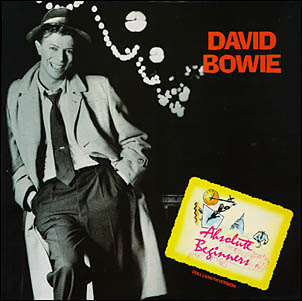
All good, valid options. But despite my love of the many different phases of Bowie, there was only one track for me: the sublime Absolute Beginners.
Written by Bowie for the much-hyped 1986 film musical of the same name, Absolute Beginners was a contemporary record which evoked the 1950s period, even if it didn't sound like a 1950s record. Bowie combines a retro 1950s sound with the 80s pop-jazz sound to create a heartfelt, irresistible anthemic ballad which manages to balance optimism and melancholy.
The track was co-produced by Bowie with Clive Langer & Alan Winstanley, who masterminded the entire film soundtrack album. Langer & Winstanley's production partnership is probably most linked to their work with Madness, and interestingly enough, there is something of the mid-80s downbeat Madness sound to the track. Indeed, it's a shame that there were no further collaborations between Bowie and Langer & Winstanley beyond this track and That's Motivation (also featured in the film).
It's a lush, real-sounding record; with a real cinematic sweep, even when considered separately from the film. Kicking off with a “ba-ba-bow-woo” vocal hook, and carried along with some irresistable saxophone, the song simply screams class. Bass, percussion and piano all add to the jazz vibe, giving a very different but complementary environment for Bowie's unmistakable voice. “I've nothing much to offer / I've nothing much to take” he opines, before heading to the bridge which contains the song's title (as opposed to the more standard practice of using it in the chorus).
The chorus is a shaft of sunlight between the clouds, a blast of optimism which deviates from the considered melancholy of the verses. "If our love song / Could fly over mountains / Sail over heartaches / Just like the films / There's no reason / To feel all the hard times / To lay down the hard lines / It's absolutely true".
Eventually, Bowie builds up to one last cry of the chorus – “It's absolutely true...” – and then gives way for the players, who take charge of a lengthy coda, which is heartbreakingly, spine-tinglingly moving, you never want it to end.
The musicianship and playing on the track is astonishing -- the band includes Rick Wakeman on piano, whilst Luis Jardim contributes percussion -- and the instrumental Dub Mix of the track shows this off to great effect.
There were three versions of Absolute Beginners released; the 7" version, which comes in at a surprising 5 and a half minutes; the eight-minute Full Length Version, and a Dub Mix (an instrumental version of the Full Length Mix). All are worth a listen -- repeated listens, in fact -- though the Full Length Version is the definitive take. Don't dismiss it as a standard 80's 12" mix, padded out to fill one side of vinyl -- this is a sumptuous, lush performance; it's as heartbreaking as it is inspiring.
Artistically and commercially, Bowie's song outperforms and transcends the parent film; a number #2 hit in the UK charts, it's also considered as one of his best 1980s tracks. But a word for the film too -- much-hyped, underperformed at the box office and largely derided it may have been, but I think Absolute Beginners does not deserve the bad rap it has gained over the years.
As someone who has read Colin MacInnes' original novel and seen the film many times, it is clear that the film is a heightened, authored take on the source material, rather than a faithful adaptation. True, it may not gel properly as a cohesive whole and some of the performances let it down, but its sheer ambition and breathtaking set-pieces deserve some praise. The opening motion shot of 1950s Soho is terrific, as is Bowie's electrifying performance of That's Motivation as he stands on the keys of a giant typewriter!
That's one of my favourite images of Bowie. Larger than life, even when dwarfed by a giant typewriter.
Absolute Beginners is an interesting film, but the title track carries so much meaning for me on many levels. I never get tired of it, but I'm always careful not to overplay it, not let it overstay it's welcome. Some things should be treasured, after all.
Unquestionably one of my favourite records, and yet another example of the diversity of the genius that is, was, and will always be, David Bowie.
1986 was an interesting year for Stock Aitken Waterman. The writing and production team had only been together for two years, but had already achieved significant success with their early work for acts such as Divine, Hazell Dean, Dead Or Alive and Princess. 1986 would see the team experiment with a number of different styles and genres, before finding a niche in the dance-pop style that would take them into the stratosphere, and some of their most interesting records were made during this period.
Perhaps the most surprising releases during this phase was a delightful trio of singles which saw the triumvirate tackle a bit of Brazilian bossa nova & latin jazz.
First up was Mondo Kane -- which appears to have been Stock Aitken Waterman undercover as a studio band, albeit fronted by the team's regular backing singers Dee Lewis and Coral Gordon -- and their debut single, New York Afternoon.
New York Afternoon was written by US jazz saxophonist Richie Cole, who originally recorded it in 1977 with Eddie Jefferson on vocals. This original version has a very traditional jazz feel, with an arrangement led by piano, bass, and of course, saxophone. As the title suggests, the song relates the lazy Sunday afternoon enjoyed by two lovers as they wander through New York in June, making memories that "We'll remember / When skies are grey and snow's fallin' in December / That was a New York afternoon". It's a very accessible, well-performed track, benefiting from Jefferson's rich voice -- and scatting!
Whilst the Mondo Kane take on New York Afternoon would retain the jazz influence of the original, Stock Aitken Waterman introduced a bossa nova element -- resulting in a sound tipping its hat to artists such as Herb Alpert and Sergio Mendes. Indeed, Mike Stock has commented that the Sergio Mendes & Brasil '88 version of Waters of March (from the 1978 album Brasil '88) was an influence on the Mondo Kane sound. It's an inspired decision, as the Mondo Kane version of New York Afternoon is simply joyous.
Opening with a chirping bird flute riff (which would recur throughout the track), the track is carried along with some fine nylon guitar, sharp bass and high-hat, bass drum and cross-stick percussion. The Jefferson role on the Mondo Kane version was taken by guest vocalist Georgie Fame, the legendary jazz / R&B singer, and his mellifluous vocals brings an extra dimension to proceedings, although Lewis and Gordon are less prominent as a result. The track also includes a terrific saxophone solo (alas uncredited); the addition of real brass always lifted a Stock Aitken Waterman track, as it does here.
Mondo Kane - New York Afternoon: Extended Version
In addition to the main 7" mix, there was an Extended Version (which really highlights the fine playing by Mike Stock, Matt Aitken and then-regular keyboard player Andy Stennett), the Nip On mix (which omits Fame's lead vocal, allowing Lewis and Gordon their moment in the sun), and the Little Samba Mix (which appears to be a re-edit of the 7" mix). The B-side was an original Stock Aitken Waterman instrumental composition, Manhattan Morning, which is the vein of the A-side, but with a more modernistic arrangement -- a pleasant listen all the same. Phil Harding was on mixing duties for all the above.
The single was released on Lisson Records, a label run by music industry legend and PWL A&R Tilly Rutherford, but despite some fair promotion, the record peaked at #70 in the charts. A word for the sleeve, which takes the look of a 1940s film poster. Announcing "A Fiesta of Music", it lists the song title and performers in a billboard style, with prominent credit for the producers -- indeed, in line with the film poster theme, the front cover carries a "Produced and Directed by Stock Aitken Waterman" statement. The rear of the sleeve, unusually, carries a detailed description of the recording techniques and facilities of PWL Studios!
The sleeve also carries a credit for soul DJ (and Georgie Fame fan) Chris Hill as A&R Co-Ordinator, which would suggest that he was responsible for Fame's involvement and would indeed play a significant role in the second of the three tracks we're looking at.
Our second track is Samba (Toda Menina Baiana) by Georgie Fame. A cover of the 1979 Gilberto Gil track Toda Menina Baiana (retitled Samba for this release, although the original title was used as a subtitle) with English lyrics by Fame, the song title translates as "Every Bahian Girl", referring to the Bahia state of Brazil. The song itself discusses the good and bad qualities of the "Bahian girl", indicating that this duality is God's will.
Samba saw Mike, Matt and Pete develop the bossa nova sound further; if anything, it leaned even further towards the Brazilian elements found in the Gil original. Ambling along with classic bossa nova percussion, nifty bass and flute, the low-key arrangement allows Fame's voice to take centre stage. Fame is at ease with both his English lyrics and the original Brazilian Portuguese lyrics, and his light scatting during the chorus is nicely done. Lifted by the bright backing vocals, handclaps and lovely trumpet, it's a delightfully uplifting track with a real summer feel -- and it's almost a shame that this was released late Autumn/early Winter.
Georgie Fame - Samba: Toda Menina Baiana Mix
Alongside the main 7" mix, there was the Toda Menina Baiana Mix (which is a straight extended version) and a further 12" remix, Ipanema Beach Party Mix (which interpolates elements of Fame's Yeh Yeh, and Astrud Gilberto's Girl From Ipanema amongst others). The 7" and 12" mixes were by Pete Hammond, with the Ipanema Beach Party Mix by Phil Harding.
The single was released on Ensign Records (a subsidiary of Chrysalis Records); Chris Hill was A&R at Ensign, and was credited as Executive Producer. One account has it that Samba was apparently especially recorded by Fame & Stock Aitken Waterman for a soul weekender in South Wales, but either way, the concept is credited to Hill on the sleeve. Unfortunately, the single stalled at #81, but it's another interesting diversion from what is regarded as the typical Stock Aitken Waterman sound -- and well worth checking out.
The final record of the three bossa nova tracks is the second (and sadly last) Mondo Kane single, which was released in late 1986. An Everlasting Love (In An Ever-Changing World) (The Doop De Do Song) was an original Stock Aitken Waterman composition, again performed by Lewis and Gordon but sans Fame this time.
An Everlasting Love (In An Ever-Changing World) (The Doop De Do Song) carried the sonic hallmarks of its predecessor -- nylon guitar, latin percussion -- but introduced some different elements such as synth pads, drum fills and electric piano. This broadened the sound but without losing the bossa nova basis. Lewis and Gordon's vocals are lovely, switching between the breathless delivery of the verses and the buoyant singalong of the catchy "do-do do do do do do do-do do do do do do" chorus refrain. There's definitely more of a pop vibe to this track but that's no bad thing; it still benefits from a shimmering latin jazz sound and is a charming listen.
Mondo Kane - An Everlasting Love (In An Ever-Changing World) (The Doop De Do Song): A Foggy Day In London Town Mix
This release only had three mixes: the Radio Edit, A Foggy Day In London Town Mix (both mixed by Pete Hammond) and an Instrumental version (mixed by Phil Harding).
As before, the single was released by Lisson Records, with pretty much the same front sleeve (albeit with different colours and text). The rear sleeve again carried the technical blurb about PWL Studios -- which incidentally ends with "As PW (Pete Waterman) always says, "always remember you can't hum a bass drum"!! Unfortunately, this single fared less well than even New York Afternoon and Samba, and appears not to have made the Top 100.
Stock Aitken Waterman's intriguing experiment into bossa nova and latin jazz largely came to an end with the final Mondo Kane single release. One factor must surely be the failure of these three singles to reach the Top 40 but it should also be considered that by the end of 1986, Stock Aitken Waterman had had hit singles with Bananarama's Venus and Mel & Kim's Showing Out (Get Fresh At The Weekend) -- these successes would suggest that Stock Aitken Waterman had found the new sound they had been looking for, and this would indeed be the case. As a result, there was perhaps less of a need to explore the sound adopted by the Mondo Kane and Georgie Fame singles. Whilst Stock Aitken Waterman would not return to this genre wholesale, they would include latin jazz elements in subsequent tracks, such as The Cool & Breezy Jazz Mix of Mandy Smith's I Just Can't Wait, and the Jazz Mix of Erik's The Devil and The Deep Blue Sea.
Whilst the influence of Sergio Mendes has been cited, it should also be noted that acts like Matt Bianco and Working Week had enjoyed some success with a latin jazz / bossa nova sound in that mid-1980s period. However, the interest in these acts chartwise was waning at the point these three Stock Aitken Waterman productions were issued (though it is fair to say that Matt Bianco went on to sustain a good level of global success and continue still to this day). Indeed, the Mondo Kane records are unfairly classed by some commentators as Matt Bianco rip-offs, which is simply a lazy comparison. If anything, the three tracks covered here all benefit from Stock Aitken Waterman merging their pop sensibilities with this jazz-funk genre, resulting in contemporary records which make a respectful nod to traditional styles.
All three tracks remain interesting examples of the versatility of Stock Aitken Waterman as producers, and demonstrate that they were capable of much more than their trademark style suggests. Best listened to if you fancy groovin' on a New York Afternoon, or indeed, on a Manhattan Morning...